
Lightweight, not light-duty
Search, folders, labels, attachments, signatures, aliases, translations, filters, and themes.
Open source email client
Gofer runs locally, serves a web UI, keeps a SQLite copy, and talks directly to IMAP, Gmail, and Outlook.
What it is
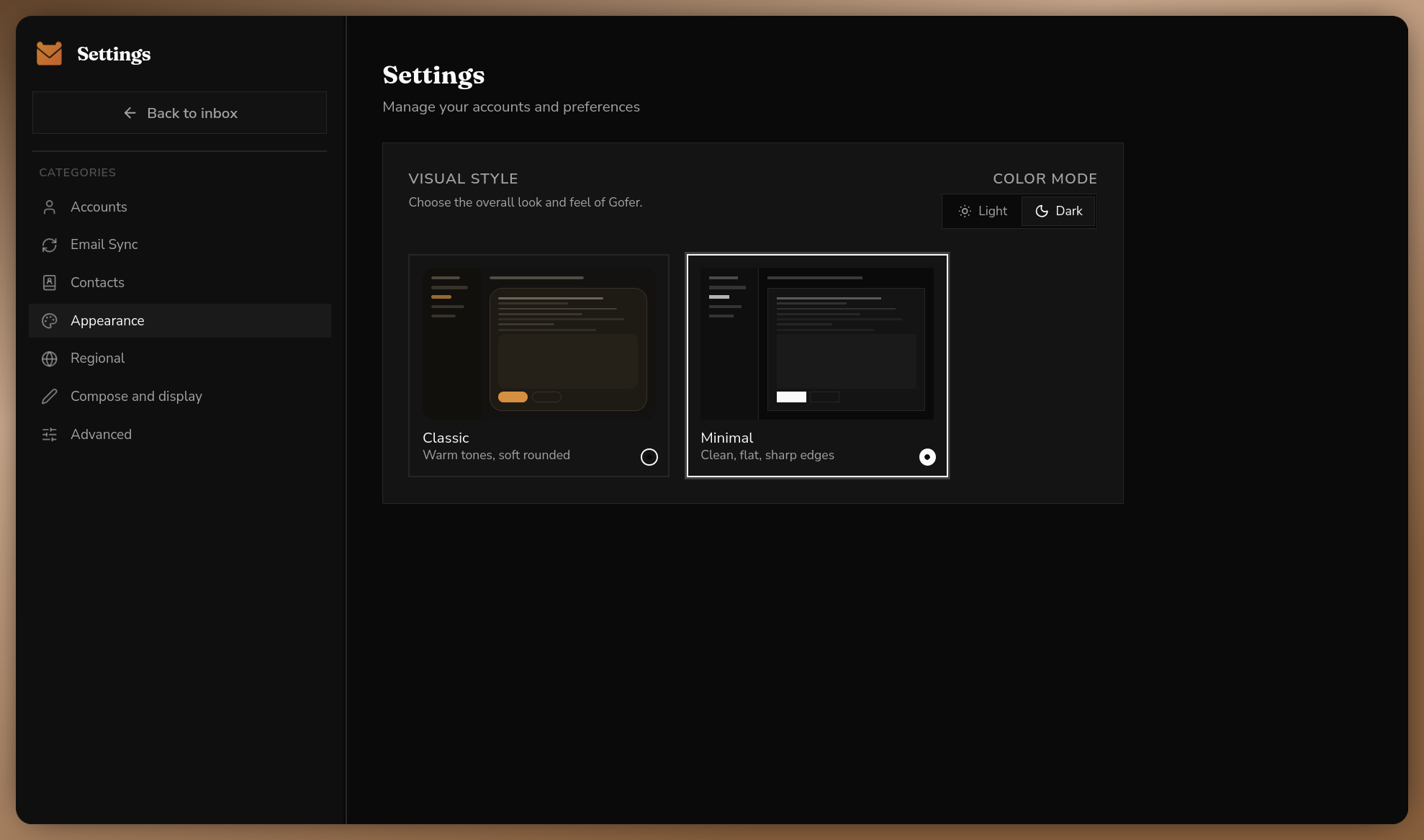
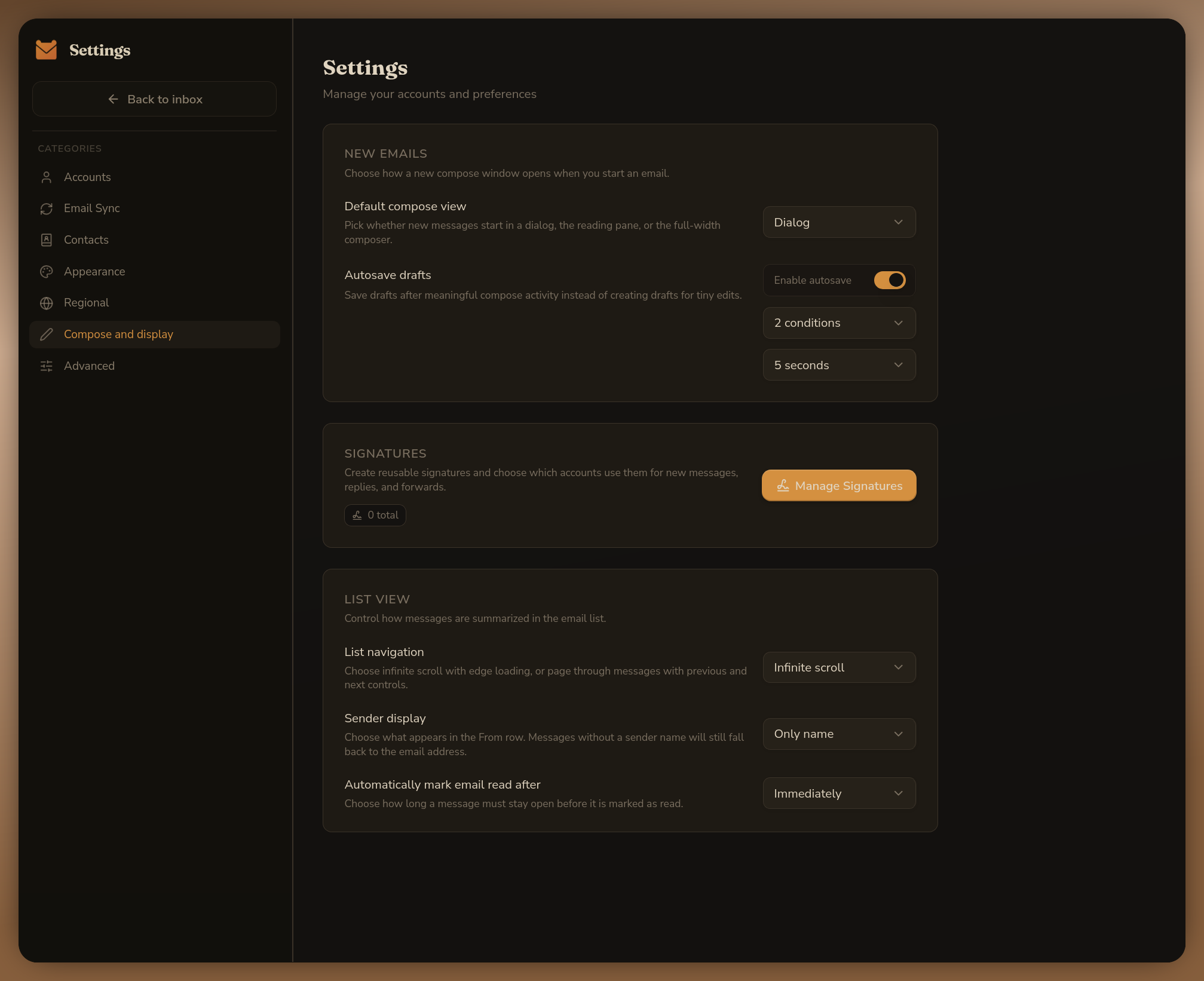
Search, folders, labels, attachments, signatures, aliases, translations, filters, and themes.
Because it's still enough for 99% of cases. You do not need Postgres. Not for this.
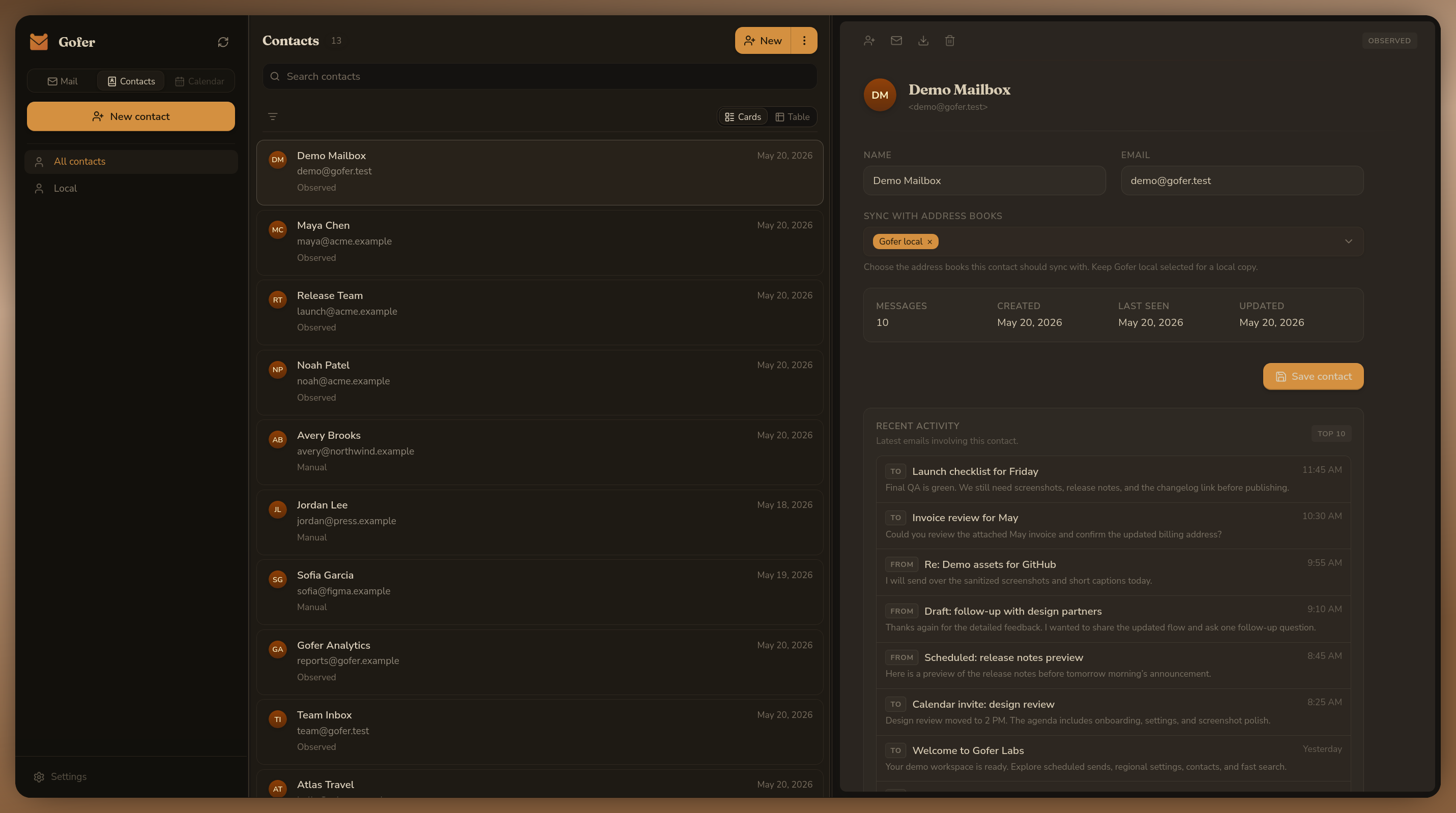
Email is the main thing. Contacts are already there through vCard, CardDAV, Google, and Outlook.
Usable for real mail. Calendar, multi-user, OAuth polish, and better diagnostics are still ahead.
Why it exists
We have shared docs, video calls, and full IDEs in the browser. Why do most webmails feel stuck in the early 00s?
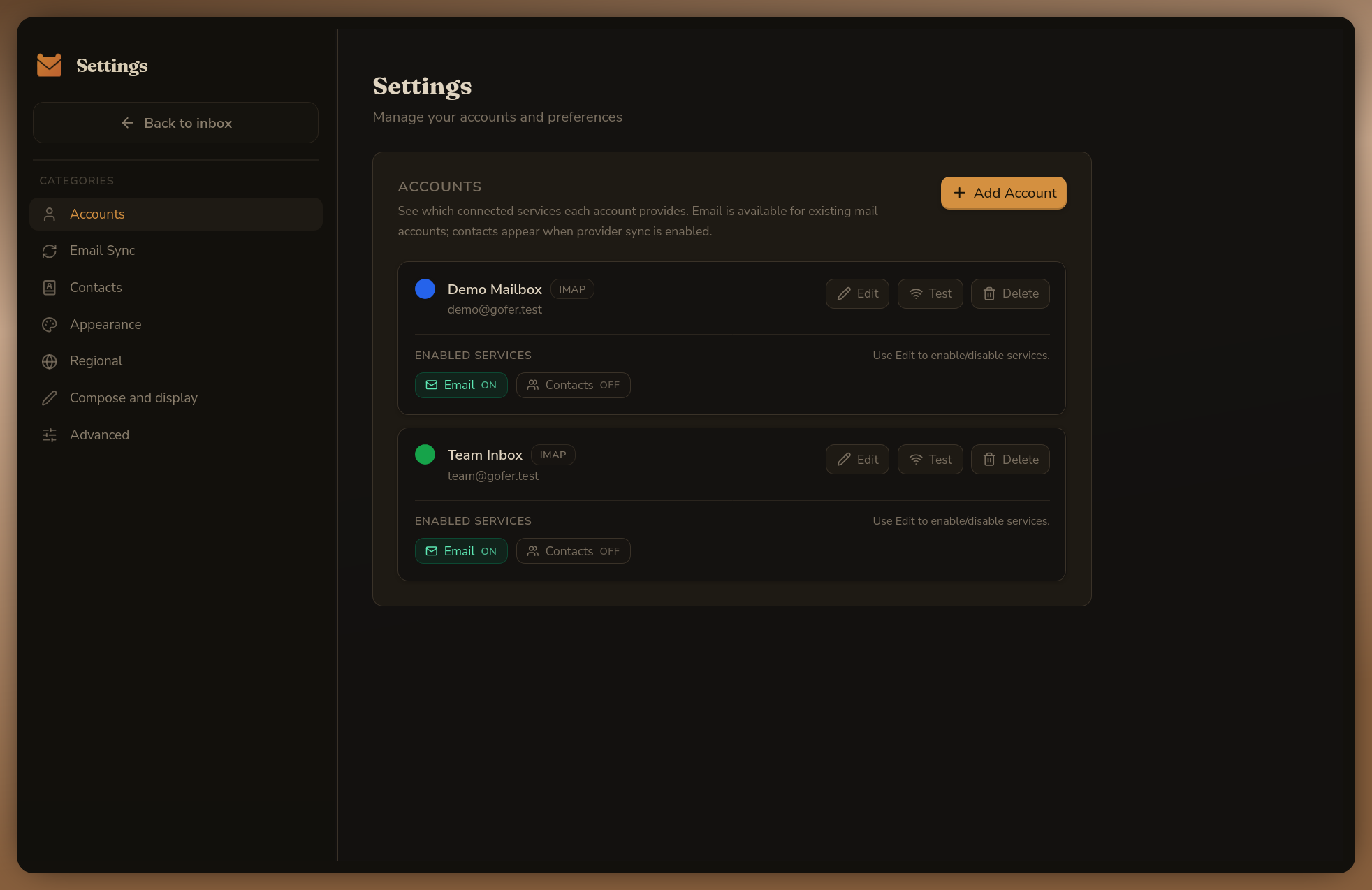
Mix IMAP, Gmail, and Outlook accounts in the same UI without treating one as the special one.
Read Inbox, Sent, Drafts, Archive, and custom folders across accounts when that is what you need.
Send, reply, move, labels, and provider-specific actions keep the right account context.
How accounts work
Regular mail accounts use the boring path: sync folders, fetch bodies, send messages, and keep state locally.
Gmail uses Google APIs for mail and contacts instead of pretending Gmail is just another IMAP server.
Outlook goes through Graph for mail, contacts, categories, attachments, and the usual message actions.
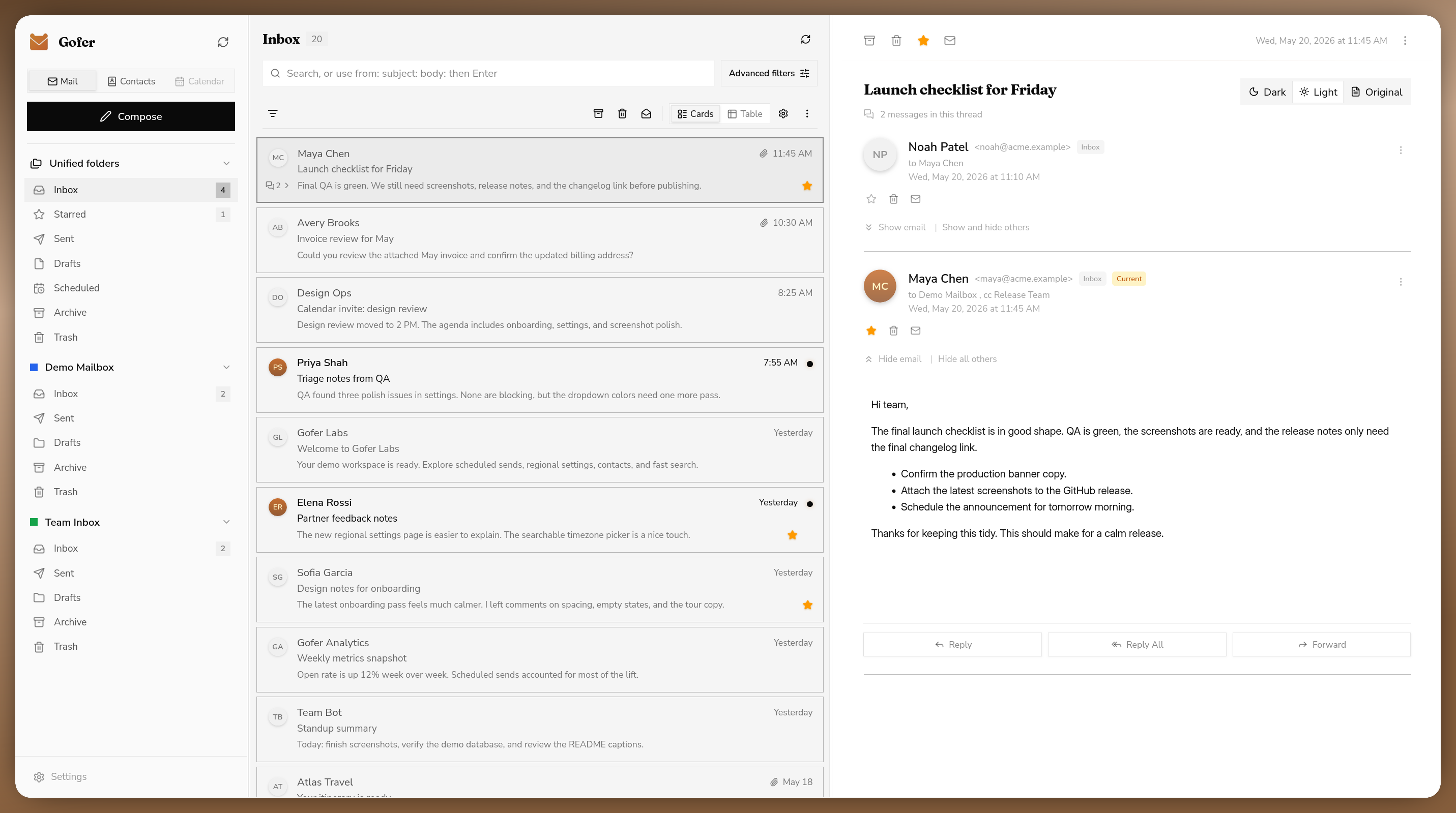
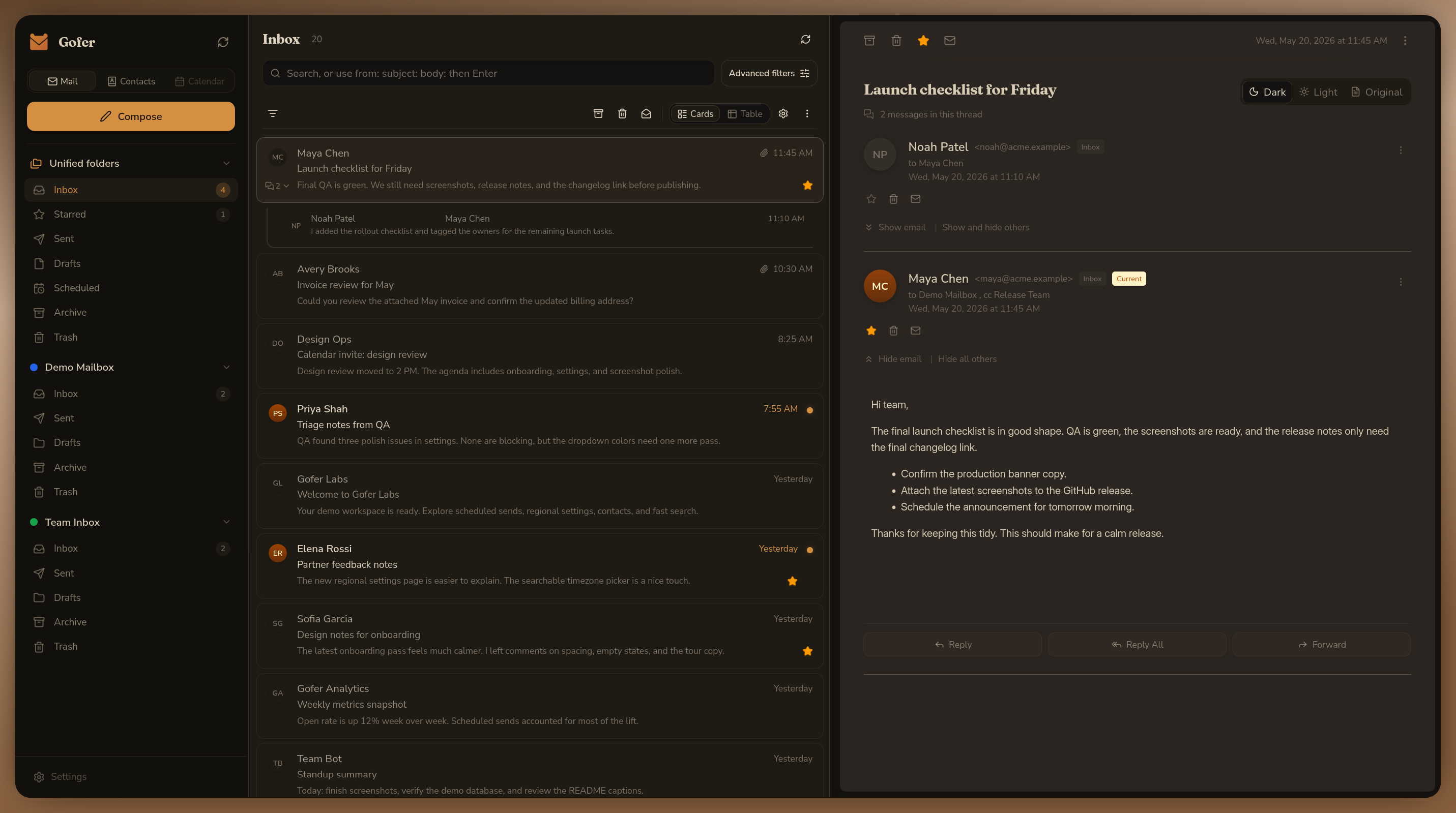
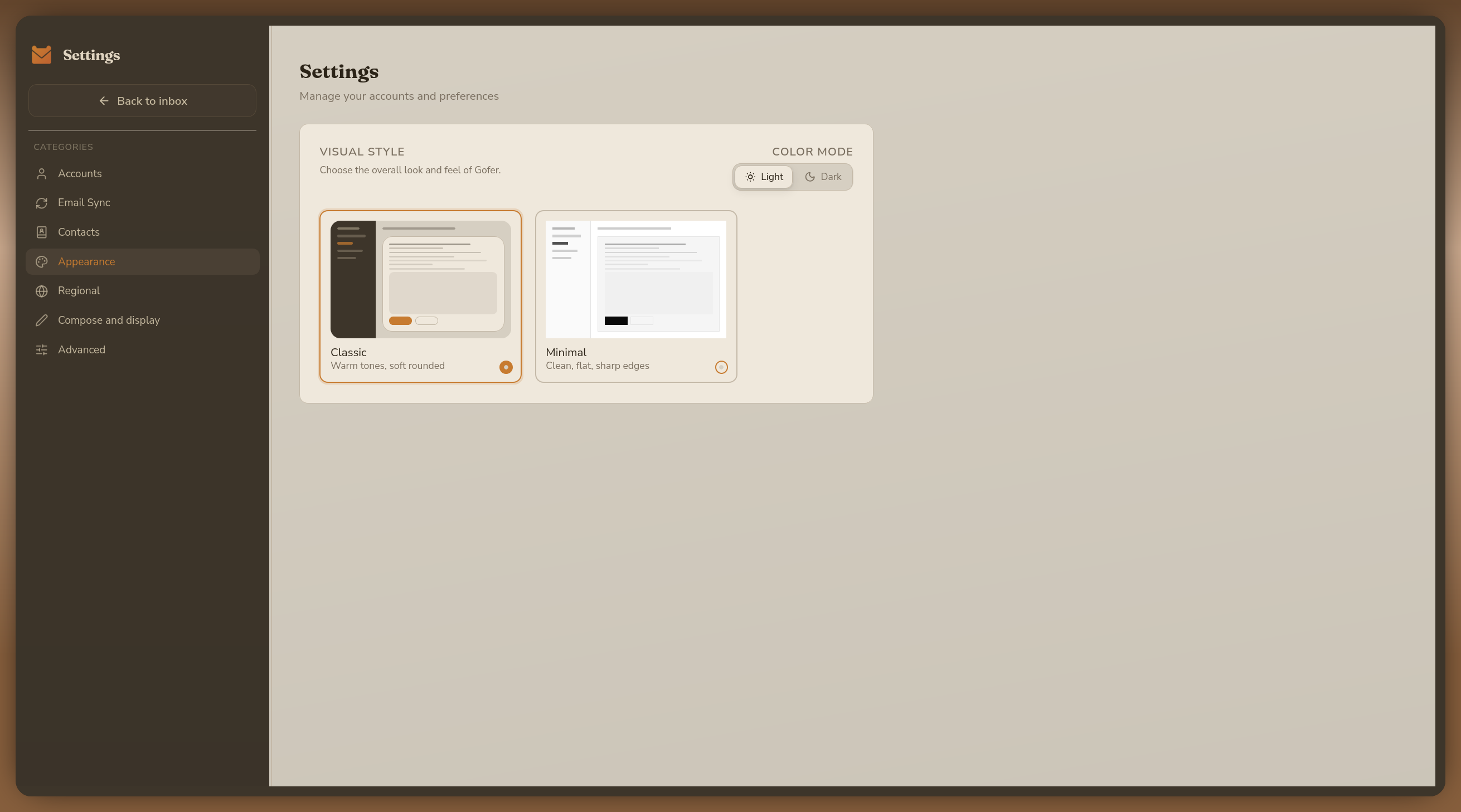
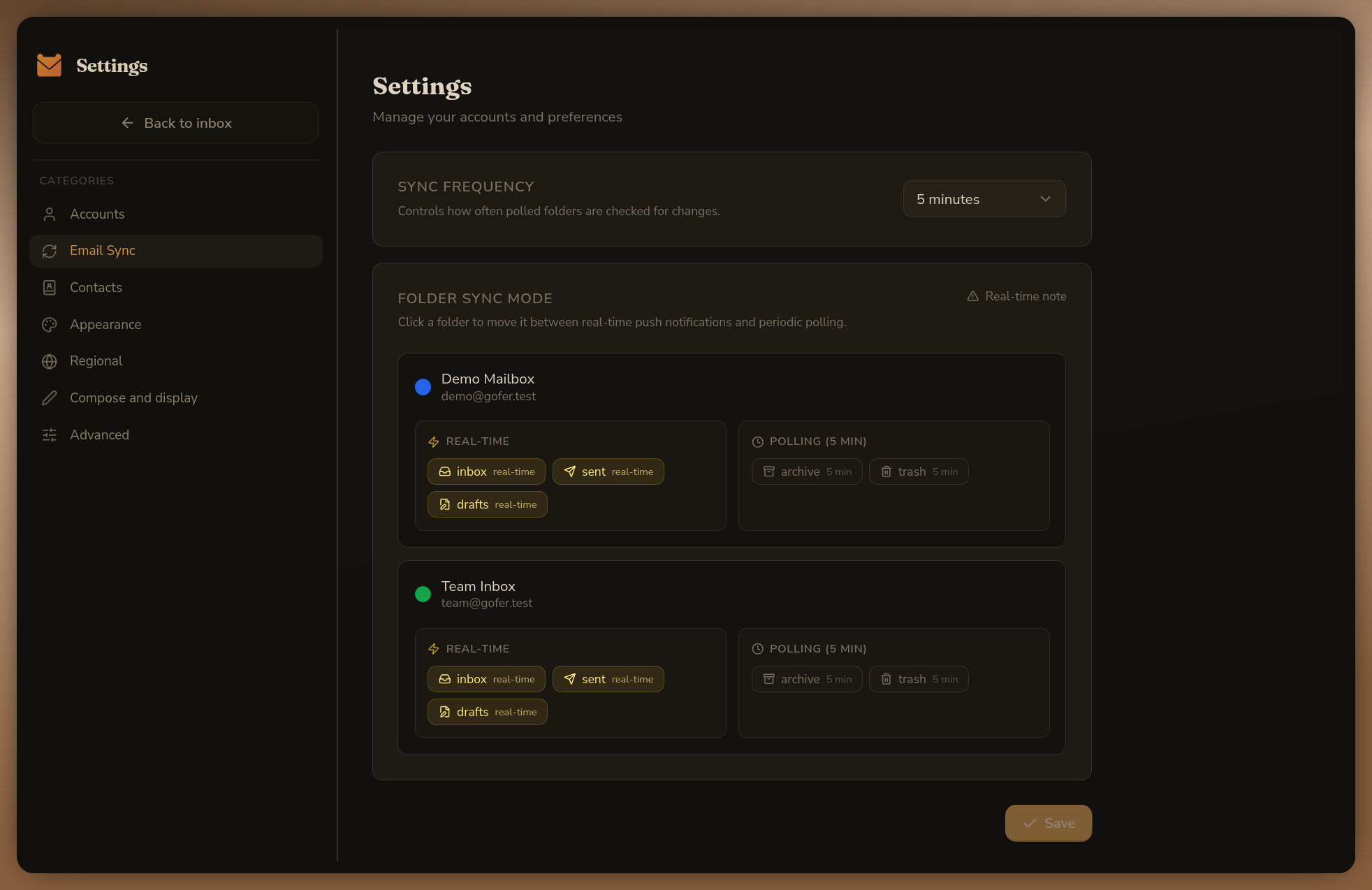
A look around
By the way, these are probably outdated already
Trying it
From source, you need Go, templ, Tailwind CSS, and Task. Release builds already include the generated web assets. Gofer is open source under the MIT License.
git clone https://github.com/cristianadrielbraun/gofer.git
cd gofer
task dev
Then open http://local.localhost:8090.
Heads up
Gofer is still early. It is fine to run locally, but public-facing setup, OAuth flows, operational hardening, and diagnostics still need more work.
Read the README